
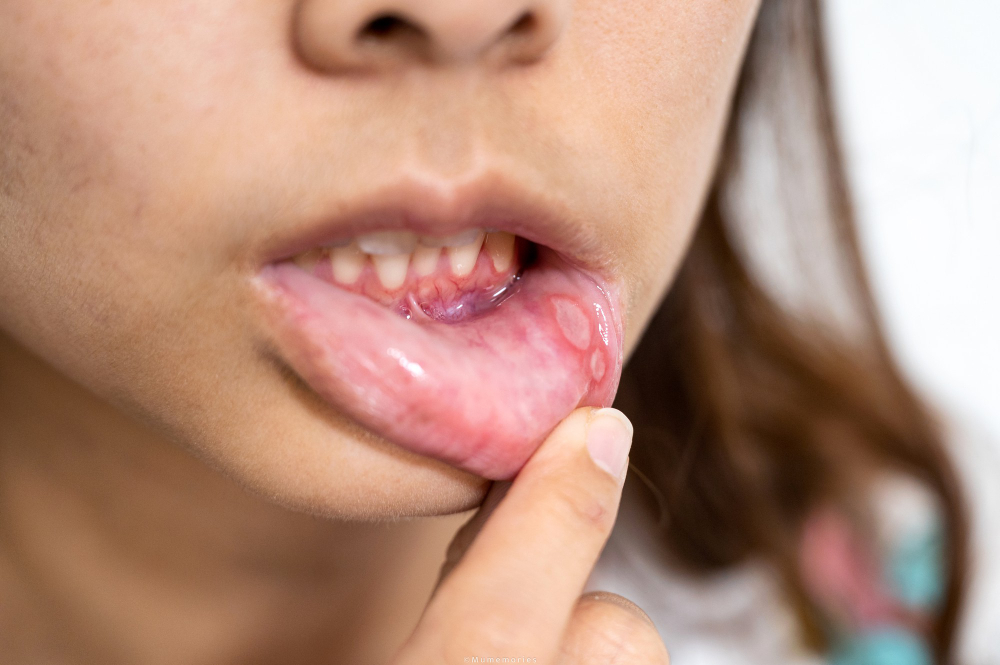
What Are Mouth Ulcers?
Mouth ulcers are small, painful sores that appear inside your mouth. They can form on your gums, tongue, or the inside of your cheeks and lips. Usually, these sores are round or oval with a white or yellow center and a red border. While most mouth ulcers are not dangerous, they can cause discomfort, especially when eating or talking. Because mouth ulcers are common, many people experience them at some point in their lives.
Common Symptoms of Mouth Ulcers
Often, mouth ulcers start with a tingling or burning feeling. Soon after, a sore appears. You may notice:
However, most mouth ulcers heal on their own within one to two weeks.
Causes and Risk Factors
There are many reasons why mouth ulcers develop. Some common causes include:
Additionally, people with a family history of mouth ulcers may be more likely to get them.
How Mouth Ulcers Are Diagnosed
Usually, a dentist or doctor can diagnose mouth ulcers by looking at them. They may ask about your symptoms and medical history. In most cases, no special tests are needed. However, if ulcers last longer than three weeks or keep coming back, your doctor may suggest blood tests or other exams. This helps rule out other health problems.
Effective Treatment Options
Most mouth ulcers heal without treatment. Still, you can try several methods to ease pain and speed up healing. For example:
Sometimes, treating an underlying cause, such as a vitamin deficiency, helps prevent future ulcers.
Home Care and Lifestyle Guidance
There are simple steps you can take at home to manage mouth ulcers. For instance:
Because treating mouth ulcers at home is often effective, many people find relief with these tips.
Prevention Tips
While you cannot always prevent mouth ulcers, you can lower your risk. Consider these tips:
With these steps, you may notice fewer painful mouth sores over time.
When to See a Dentist or Doctor
Most mouth ulcers heal on their own. However, you should see a dentist or doctor if:
Early care can help rule out serious problems and provide the right treatment.
Conclusion
In summary, mouth ulcers are common but can cause pain and discomfort. Because most heal on their own, home care is often enough. However, do not ignore ongoing or severe symptoms. Consult a dental specialist at KRISHEES MULTISPECIALITY DENTAL CLINIC for personalized advice on mouth ulcers.